Why is my contractor asking for a big deposit upfront
A large deposit request isn't automatically a red flag. Here's why contractors ask, what Arizona law allows, and how to protect your money in Glendale.
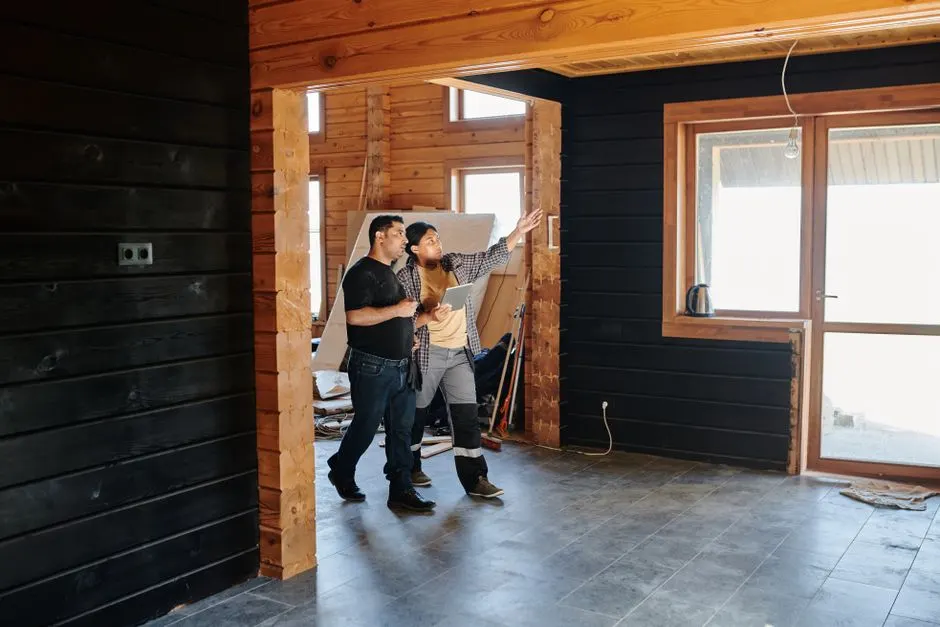
Your contractor is asking for a big deposit upfront because construction materials, permits, and labor must be paid before your project is finished. In Arizona, a deposit of 10% to 30% of the total contract price is common, and for larger remodels it can reach 50% when custom cabinets, windows, or structural materials are ordered on day one. That request is not automatically a scam - but it is also not something you should hand over without understanding what the money covers.
We are RiseCore Builders, a General Contractor serving Glendale and the West Valley. We field this question on almost every estimate, so this post breaks down why deposits exist, what Arizona law allows, how much is normal in 2026, and the warning signs that separate a legitimate contractor from a bad one.
Why contractors ask for a deposit in the first place
A contractor deposit upfront is working capital that lets your project start without the contractor financing your materials out of pocket. When we sign a kitchen remodel in Glendale, the first week involves ordering cabinets, scheduling the electrician, pulling permits from the city, and renting a dumpster. None of that happens on a handshake.
Here is what the deposit actually pays for on a typical job:
- Materials: Cabinets, tile, lumber, and fixtures are often special-order. Suppliers want payment or a deposit before they release the order.
- Permits: The City of Glendale charges permit fees based on project valuation. On a $40,000 remodel, permit fees can run $600 to $1,200.
- Labor mobilization: Crews need to be scheduled and paid. A deposit locks in your start date.
- Insurance and bonding: Your project has to be covered under the contractor's general liability and workers' comp policies before anyone swings a hammer.
Without a deposit, a contractor would have to float thousands of dollars on every job. That is not a sustainable business model, and the contractors who try it usually cut corners or disappear mid-project.
What Arizona law says about contractor deposits
Arizona does not cap how much a licensed contractor can ask for as a deposit, but the Arizona Registrar of Contractors (ROC) requires that any deposit be reasonable and tied to actual project costs. The ROC can discipline a contractor who takes money and fails to perform.
Two rules matter most for homeowners:
- Written contract required: Any project over $1,000 must have a written contract that spells out the deposit amount, payment schedule, and scope of work.
- Deposit must be applied to your project: A contractor cannot use your deposit to fund a different job. That is commingling, and it is grounds for license suspension.
If a contractor asks for cash only, refuses to put the deposit in writing, or wants the full contract price before starting, that is a problem regardless of what the law allows. Legitimate contractors invoice, document, and apply your money to your job.
We see a lot of this in older Glendale neighborhoods like Chevy Chase General Contractor, where homes built in the 1950s and 1960s often need plumbing and electrical upgrades before cosmetic work can start. Those pre-work costs are real, and they are exactly what a deposit covers.
How much deposit should a contractor ask for in Glendale?
Typical 2026 deposit ranges in Glendale run 10% to 30% for standard remodels, and up to 50% when the project requires custom materials ordered upfront. The number should track the actual front-loaded costs, not the contractor's cash flow problems.
Here is a rough guide based on what we see across the West Valley:
- Bathroom remodel ($15,000-$30,000): 20%-30% deposit, usually $3,000-$9,000.
- Kitchen remodel ($30,000-$75,000): 25%-40% deposit when cabinets and counters are custom, $7,500-$30,000.
- Whole-home renovation ($100,000+): 30%-50% deposit, often structured as a draw schedule rather than one lump sum.
- Room addition or structural work: 20%-35%, with the first draw covering engineering, permits, and foundation materials.
If a contractor asks for 50% on a $12,000 bathroom with stock materials, ask why. If the answer is "that's just how we do it," keep shopping. If the answer is "because the tile and vanity are custom and the supplier wants 50% down," that is a legitimate explanation you can verify.
For larger projects, a draw schedule is better than one big deposit. Instead of handing over $40,000 on day one, you release funds at milestones: demo complete, rough-in inspected, drywall hung, final walkthrough. That protects both sides.
When a large deposit request is a red flag
A large deposit request contractor becomes a problem when the money is disconnected from real project costs or when the contractor pressures you to pay before any paperwork exists. The size of the deposit matters less than what it is tied to.
Watch for these signals:
- Cash only, no receipt: Every payment should be traceable. Checks, cards, or bank transfers, with a written receipt.
- No written contract: Arizona requires one for projects over $1,000. If they won't put it in writing, walk away.
- Deposit exceeds 50% with no material justification: High deposits are sometimes legitimate, but the contractor should be able to explain exactly what the money buys.
- Pressure to pay today: "The price goes up tomorrow" or "I have another client waiting" are sales tactics, not construction realities.
- No ROC license number on the contract: You can verify any Arizona contractor's license at the ROC website in about two minutes.
- Requests to make the check out to a person, not the company: That is how deposits get diverted.
One red flag alone is not always disqualifying. Three together usually means you are talking to the wrong contractor.
How to protect yourself from contractor deposit scams in Glendale
Protecting yourself from contractor deposit scams in Glendale comes down to documentation, verification, and staged payments. You do not need to be a construction expert - you need a paper trail and a payment schedule that keeps you in control.
Here is what we recommend to every homeowner before they write a deposit check:
- Verify the ROC license. Look up the license number, check the complaint history, and confirm the license is active and in the right classification.
- Get a written contract. It should list the deposit amount, the payment schedule, the scope of work, the start and completion dates, and the process for change orders.
- Pay by check or card. Never cash. Never to a personal account. Make the check out to the licensed business name.
- Ask what the deposit covers. A good contractor can itemize it: $4,200 for cabinets, $800 for permits, $1,500 for the electrician's deposit, and so on.
- Use a draw schedule for big jobs. Tie payments to completed milestones, not calendar dates.
- Keep every receipt and change order. If something goes wrong, documentation is your leverage.
We also tell homeowners to ask for a certificate of insurance before work starts. If a contractor cannot produce one, the deposit is the least of your problems.
Common mistakes homeowners make with contractor deposits
The most common mistake is paying a deposit before signing a contract, which leaves you with no legal recourse if the contractor disappears. We have seen homeowners in Glendale hand over $10,000 in cash with nothing but a text message confirming the price. That is a nightmare to unwind.
Other mistakes we see:
- Paying the full contract price upfront. Never pay 100% before work starts. A deposit is a deposit, not a prepayment.
- Skipping the ROC license check. It takes two minutes and eliminates most bad actors.
- Assuming a low deposit means a safe contractor. Some scammers ask for a small deposit to get in the door, then hit you with change orders once demo starts.
- Not reading the payment schedule. A contract that says "50% on signing, 50% on completion" gives you no leverage if the work stalls.
- Paying for materials that never arrive. If the contractor asks for a materials deposit, ask for the supplier's invoice or order confirmation.
The fix is simple: slow down, read the contract, and pay in stages tied to progress.
When to call a professional
If you are getting quotes for a remodel and the deposit question is making you uneasy, bring in a licensed contractor who will walk you through the numbers. We write itemized deposits, use draw schedules on larger projects, and put everything in a written contract before a dollar changes hands.
We handle Residential General Contractor Glendale AZ work across the West Valley, from bathroom refreshes to full-home renovations. If you want a second opinion on a deposit request from another contractor, we will look at the contract with you - no pressure, no sales pitch.
Frequently Asked Questions
Why is my contractor asking for a big deposit upfront?
Contractors ask for deposits to cover materials, permits, and labor that must be paid before your project finishes. In Arizona, 10% to 30% is typical, and up to 50% when custom materials are ordered on day one. The deposit should be tied to real, itemized project costs.
How much deposit can a contractor ask for in Glendale AZ?
Arizona does not cap deposits, but the ROC requires them to be reasonable and tied to actual costs. In Glendale, 10% to 30% is standard for most remodels, and up to 50% for projects with custom cabinets, windows, or structural materials ordered upfront.
Is a large upfront deposit normal for contractors in Glendale, Arizona?
It can be normal when the project requires special-order materials or significant permit and engineering costs. A 40% deposit on a custom kitchen is reasonable. A 50% deposit on a stock bathroom remodel is not - ask for an itemized breakdown before paying.
What should I do if my contractor asks for a big deposit?
Ask what the deposit covers, get it in writing, verify the ROC license, and pay by check or card - never cash. If the contractor refuses a written contract or pressures you to pay immediately, walk away and get another quote.
Can I negotiate a smaller deposit?
Yes. Many contractors will accept a smaller deposit if you agree to a draw schedule that releases funds at milestones. If the contractor insists on a large lump sum with no flexibility, that is worth noting when you compare bids.
Get help with General Contractor in Glendale
If you want a contractor who explains every line of the deposit before you sign, call RiseCore Builders. We serve Glendale and the surrounding West Valley with written contracts, itemized deposits, and draw schedules that keep you in control.
Call (623) 469-2452 to schedule a free estimate.